


As a supplier of commercial dehumidifiers, I often get asked about the nitty - gritty details of these machines, especially the filtration system. So, let's dig into what exactly the filtration system in a commercial dehumidifier is all about.
Why Filtration in a Commercial Dehumidifier?
First off, you might be wondering why a dehumidifier even needs a filtration system. Well, commercial spaces like warehouses, factories, and large offices are often filled with all sorts of contaminants. Dust, pollen, mold spores, and even small particles of industrial debris can be floating around in the air. When a dehumidifier works to remove excess moisture from the air, it can also act as a sort of air purifier at the same time.
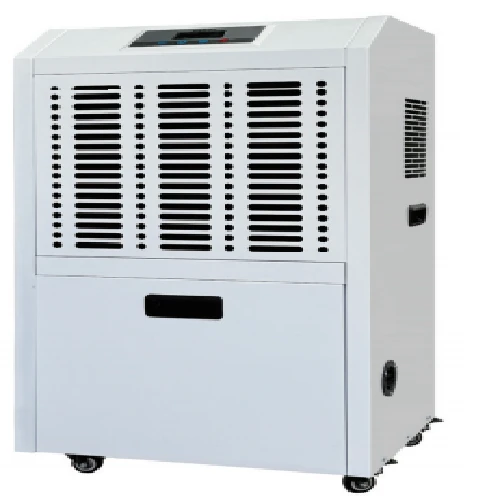
A good filtration system helps in maintaining better air quality. In places where people work or where products are stored, poor air quality can lead to all sorts of problems. For workers, it can cause respiratory issues like allergies and asthma. And for stored products, especially sensitive ones like electronics or food, contaminants in the air can lead to damage over time.
Types of Filters in Commercial Dehumidifiers
Pre - filters
The pre - filter is usually the first line of defense in a commercial dehumidifier's filtration system. It's designed to catch the larger particles in the air. Think of things like dust bunnies, hair, and lint. These big particles can clog up the more delicate and expensive filters further down the line, so the pre - filter acts as a sort of guard.
Pre - filters are often made of a coarse material that allows air to pass through easily while trapping the larger debris. They're also usually easy to clean or replace. Most commercial dehumidifiers have a simple access panel where you can quickly pull out the pre - filter, vacuum it, or wash it under running water. This regular maintenance helps to keep the entire dehumidifier working efficiently.
Activated Carbon Filters
Next up are the activated carbon filters. These are great at removing odors and certain chemicals from the air. In a commercial setting, there could be all sorts of unpleasant smells. For example, in a factory, there might be the smell of solvents or in a restaurant kitchen, the odor of cooking grease.
Activated carbon has a large surface area with lots of tiny pores. These pores can trap odor - causing molecules and some volatile organic compounds (VOCs). When the air passes through the activated carbon filter, the bad - smelling and harmful chemicals stick to the carbon, leaving the air smelling fresher and cleaner.
HEPA Filters
High - Efficiency Particulate Air (HEPA) filters are the cream of the crop when it comes to filtration. They're capable of capturing at least 99.97% of particles that are 0.3 microns in diameter. That's super small! Things like fine dust, smoke, mold spores, and even some bacteria and viruses can be trapped by HEPA filters.
In commercial environments where air quality is a top priority, such as hospitals, laboratories, or cleanrooms, HEPA - equipped dehumidifiers are a must. However, these filters can be a bit more expensive and require more frequent replacement compared to pre - filters.
How the Filtration System Works
The process starts when the dehumidifier pulls in the moist air from the surrounding environment through its intake. The air first hits the pre - filter. As mentioned earlier, the pre - filter catches the large particles, preventing them from going any further into the machine.
After passing through the pre - filter, the air moves on to the activated carbon filter (if the dehumidifier is equipped with one). Here, the odor - causing molecules and chemicals are adsorbed by the activated carbon.
Finally, the air reaches the HEPA filter (again, if present). The HEPA filter traps the tiny particles, ensuring that the air that comes out of the dehumidifier is much cleaner and purer than when it went in.
Once the air is filtered, the dehumidification process continues. The moisture in the air is condensed into water, which is then collected in a reservoir or drained out. And the now - dry and clean air is blown back into the room.
Maintenance of the Filtration System
Proper maintenance of the filtration system is crucial for the long - term performance of a commercial dehumidifier. As I mentioned before, the pre - filter should be cleaned regularly. Depending on the environment, this could mean cleaning it every week or at least every few weeks.
The activated carbon filter and HEPA filter have a limited lifespan. The activated carbon filter will eventually become saturated with odors and chemicals, and the HEPA filter will get clogged with particles. You should follow the manufacturer's recommendations for when to replace these filters. Usually, the activated carbon filter might need to be replaced every 3 - 6 months, and the HEPA filter every 6 - 12 months.
Our Commercial Dehumidifiers and Filtration
We, as a commercial dehumidifier supplier, understand the importance of a top - notch filtration system. That's why our Commmercial Dehumidifier models come with high - quality pre - filters, activated carbon filters, and in some cases, HEPA filters.
Our pre - filters are made of durable materials that can withstand heavy use and are designed for easy cleaning. The activated carbon filters in our dehumidifiers are made from high - grade carbon that can effectively remove a wide range of odors and chemicals. And for customers who need the highest level of air purification, our HEPA - equipped models offer outstanding performance.
Why Choose Us?
When you choose our commercial dehumidifiers, you're not just getting a machine that can remove excess moisture from the air. You're also getting a reliable air - purifying solution. Our filtration systems are designed and tested to ensure that they can handle the toughest commercial environments.
We also provide excellent after - sales support. Our team of experts can help you with any questions you have about maintaining the filtration system or the dehumidifier in general. And we offer a wide range of replacement filters at competitive prices, so you can keep your dehumidifier running in top condition without breaking the bank.
Let's Talk Business!
If you're in the market for a commercial dehumidifier with a great filtration system, I'd love to talk to you. Whether you're running a small business or a large industrial facility, we have the right dehumidifier for your needs. Don't hesitate to reach out to us to discuss your requirements and get a quote.
References
- "Commercial Dehumidification Handbook" - A comprehensive guide on commercial dehumidifiers and their components.
- "Air Filtration Technology" - A research paper that delves into the different types of air filters and their applications.