


Integrated Cooling Systems for Solar Power: A General Overview
Integrated cooling systems are designed to manage and maintain optimal temperature levels in various environments by efficiently removing heat. They bring together multiple components into a single, cohesive unit, simplifying installation and operation while enhancing performance.
These systems typically consist of a compressor, condenser, evaporator, and expansion valve, all working in harmony to transfer heat from an area to be cooled to the outside environment. They can be air-cooled or water-cooled, depending on the specific requirements and available resources at the installation site.
Solar power systems are a significant part of the global move towards renewable energy. Comprising solar panels, inverters, batteries (in off-grid or hybrid systems), and other associated components, they convert sunlight into electricity or heat. Solar panels, in particular, absorb sunlight to generate direct current (DC) electricity, which is then converted into alternating current (AC) by inverters for use in homes, businesses, or other facilities.
However, as solar panels operate, they are prone to heating up. Elevated temperatures can cause a decrease in the efficiency of solar cells. The relationship between temperature and solar panel performance is described by the temperature coefficient. As the temperature rises, the output voltage of the solar panel decreases, leading to a reduction in power output. For example, for every degree Celsius above the standard test conditions (usually around 25°C), the power output of a typical crystalline silicon solar panel can decrease by about 0.3–0.5%.
Given the performance degradation of solar panels due to heat, the question arises: Can an integrated cooling system be used in a solar power system?
One major advantage of integrating a cooling system into a solar power setup is the potential to significantly improve solar panel efficiency. By keeping the panels at a lower operating temperature, the system can maintain a higher power output. For instance, if a solar power system in a hot climate is equipped with an integrated cooling system, it can counteract the heat-induced efficiency losses. This means that more sunlight can be effectively converted into electricity over time, leading to increased overall energy production.
Another benefit is the extension of the lifespan of the solar panels. High temperatures accelerate the aging process of solar cells, causing materials to degrade more quickly. By using an integrated cooling system to regulate the temperature, the stress on the panels is reduced. This can potentially prevent or delay issues such as delamination, cracking of the encapsulation material, and degradation of the electrical contacts. As a result, the solar panels can operate effectively for a longer period, reducing the need for frequent replacements and lowering the long-term costs of the solar power system.
There are different types of integrated cooling systems that can be considered for solar power systems:
Air-Cooled Integrated Cooling Systems
Air-cooled systems use fans to blow air over the solar panels to remove heat. They are relatively simple in design and cost-effective to install. These systems can be easily integrated with existing solar power setups, as they do not require a complex water source or piping infrastructure. However, their cooling capacity is somewhat limited, especially in hot and humid climates where the air may already be close to the temperature of the panels.
Water-Cooled Integrated Cooling Systems
Water-cooled systems are more efficient at removing heat compared to air-cooled ones. They use water circulation to transfer heat from the solar panels. A water-cooled system can have pipes or channels attached to the back of the solar panels, through which water flows. As the water absorbs heat from the panels, it can be pumped to a heat exchanger, where the heat is dissipated. This type of system can provide better temperature control, but it requires a reliable water source and a more complex installation process.
Evaporative Cooling Integrated Systems
Evaporative cooling takes advantage of the latent heat of vaporization. These systems spray a fine mist of water onto the solar panels, and as the water evaporates, it absorbs heat from the panels, cooling them down. Evaporative cooling can be highly effective, especially in dry climates. However, it also requires a continuous supply of water, and there may be concerns about water scaling and the need for water treatment to prevent corrosion.
Beyond these three main types, several other cooling technologies originally developed for other applications can be adapted for solar power systems. Greenhouse environmental control systems, for example, are designed to maintain stable temperature and humidity levels. Although originally intended for greenhouse applications, the technology in these systems can be adapted to cool solar panels. Their precise temperature control mechanisms can be fine-tuned to keep solar panel temperatures within an optimal range, ensuring high-efficiency power generation.
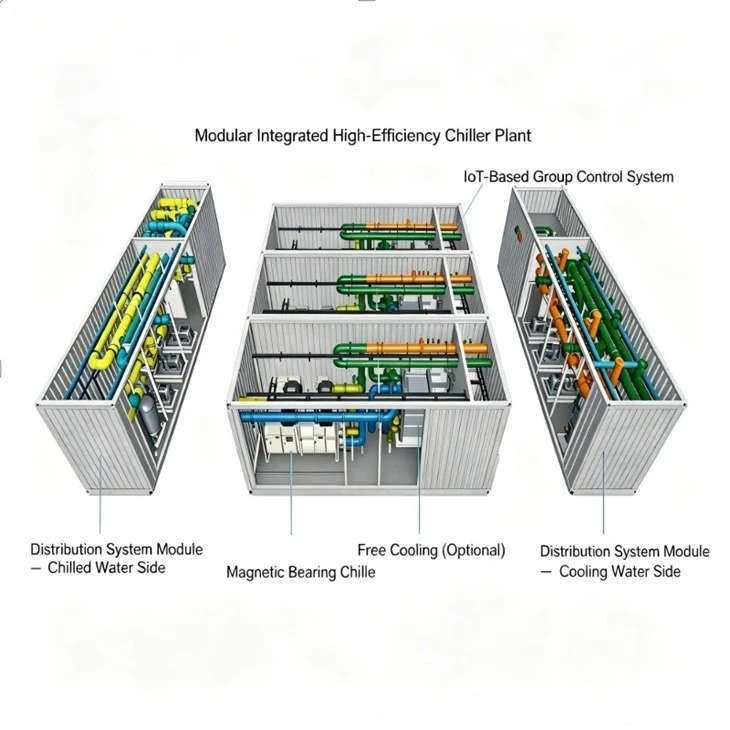
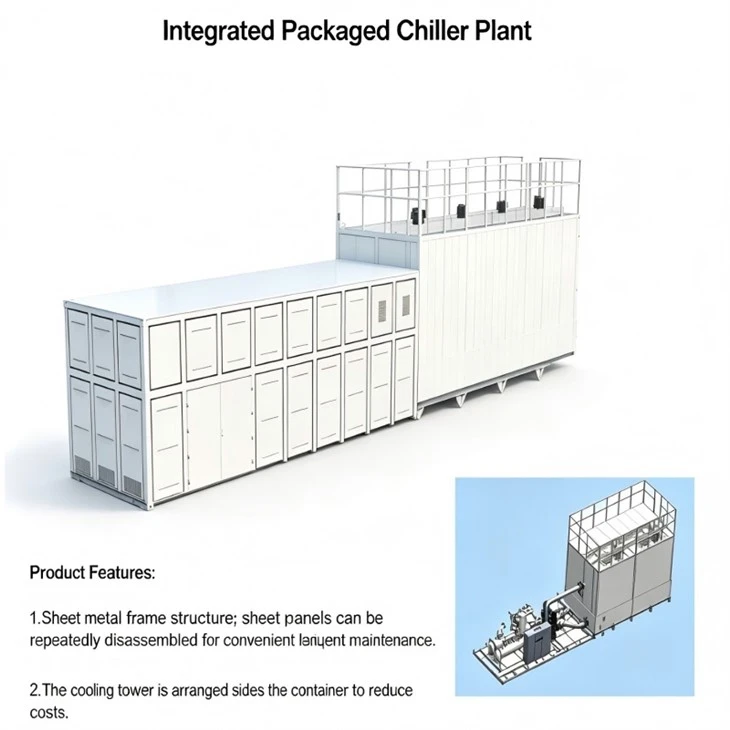
High-efficiency integrated chiller plants offer a powerful cooling solution. With advanced refrigeration technology and energy-efficient components, they can handle large-scale solar power installations. A chiller plant is capable of providing consistent cooling, ensuring that even in high-demand situations, solar panels remain at a suitable temperature.
Modular chiller plants are a flexible option. They can be customized according to the specific requirements of different solar power systems. Whether it is a small-scale residential solar installation or a large-scale commercial solar farm, the modular design allows for easy expansion and adjustment of the cooling capacity.
Grow room climate control systems also have features that can be relevant for solar power cooling. These systems are designed to create a stable climate environment, and the same principles can be applied to solar panels. They can help regulate temperature, humidity, and air circulation around the panels, enhancing their performance.
For solar power systems in more compact or mobile setups, containerized chiller plants are an ideal choice. They are pre-fabricated and can be easily transported and installed. The containerized design also protects the cooling equipment from external factors, ensuring reliable operation.
When considering the integration of a cooling system into a solar power system, it is essential to evaluate several factors. The geographical location of the solar power installation plays a crucial role. In hot and arid regions, a water-cooled or evaporative cooling system may be more effective, while in cooler or more humid areas, an air-cooled system may suffice.
The scale of the solar power system also matters. Larger solar farms may require more powerful and complex cooling solutions, such as a high-efficiency integrated chiller plant, while smaller residential systems may be well-served by a simpler air-cooled or modular system.
Cost is another important consideration. The initial investment for an integrated cooling system can be significant, but it needs to be weighed against the long-term benefits of increased efficiency and extended panel lifespan. Additionally, the operating costs, including energy consumption and maintenance, should also be factored in.
In conclusion, an integrated cooling system can indeed be used in a solar power system, and it offers several advantages in terms of improving efficiency and prolonging the lifespan of solar panels. A range of cooling technologies-from air-cooled and water-cooled systems to evaporative cooling and adapted chiller plants-can meet the diverse needs of different solar power installations. As the demand for renewable energy continues to grow, integrating cooling solutions into solar power systems may become an increasingly valuable strategy for maximizing energy output and ensuring long-term reliability.
References
- Duffie, J. A., & Beckman, W. A. (2013). Solar Engineering of Thermal Processes. Wiley.
- Chow, T. T., Chan, A. P. C., & Fong, K. F. (2011). A review on photovoltaic/thermal hybrid solar technology. Renewable and Sustainable Energy Reviews, 15(1), 365 - 379.