


The refrigerant charge in an air-cooled scroll chiller plays a pivotal role in determining its performance. As a leading supplier of air-cooled scroll chillers, I have witnessed firsthand how the right or wrong refrigerant charge can significantly impact the chiller's efficiency, reliability, and longevity. In this blog, I will delve into the intricate relationship between refrigerant charge and the performance of an air-cooled scroll chiller, exploring the mechanisms at play and providing practical insights for optimal operation.
Understanding the Basics of Refrigerant Charge
Refrigerant is the lifeblood of any air-cooled scroll chiller. It undergoes a continuous cycle of compression, condensation, expansion, and evaporation to transfer heat from the indoor environment to the outdoor air. The refrigerant charge refers to the amount of refrigerant present in the chiller's system. An appropriate refrigerant charge is essential for the chiller to operate at its designed capacity and efficiency.
When the refrigerant charge is correct, the chiller can effectively absorb heat from the chilled water and release it to the outdoor air. The compressor operates smoothly, and the system maintains stable pressure and temperature levels. However, if the refrigerant charge is either too high or too low, it can lead to a range of performance issues.
Effects of Under - charging
Reduced Cooling Capacity
One of the most noticeable effects of under - charging is a reduced cooling capacity. When there is not enough refrigerant in the system, the evaporator cannot absorb enough heat from the chilled water. As a result, the temperature of the chilled water leaving the evaporator will be higher than the setpoint, and the chiller will struggle to meet the cooling demand of the space. This can lead to discomfort for the occupants and may even affect the operation of sensitive equipment in industrial or commercial settings.
Compressor Overheating
An under - charged system can also cause the compressor to overheat. With insufficient refrigerant, the compressor has to work harder to maintain the required pressure differential. The lack of refrigerant also means less cooling for the compressor motor. As the compressor temperature rises, it can lead to premature wear and tear, reduced efficiency, and eventually, compressor failure.
Higher Energy Consumption
To compensate for the reduced cooling capacity, the chiller may run for longer periods or at a higher speed. This results in increased energy consumption, leading to higher operating costs. In addition, the inefficiencies caused by under - charging can further exacerbate the energy waste, as the system is not operating at its optimal state.
Effects of Over - charging
Increased Condensing Pressure
Over - charging the refrigerant can cause the condensing pressure to rise significantly. The excess refrigerant in the condenser makes it difficult for the heat to be dissipated effectively. As a result, the pressure in the condenser increases, putting additional stress on the compressor and other components of the system. High condensing pressure can lead to compressor overload, reduced efficiency, and potential damage to the system.
Flooded Evaporator
An over - charged system can also lead to a flooded evaporator. When there is too much refrigerant, it may not fully evaporate in the evaporator. The liquid refrigerant can then enter the compressor, causing a phenomenon known as liquid slugging. Liquid slugging can damage the compressor valves, pistons, and other internal components, leading to costly repairs or replacement.
Poor Oil Return
Refrigerant and lubricating oil are closely related in a chiller system. The refrigerant helps to carry the oil back to the compressor. In an over - charged system, the excess refrigerant can disrupt the oil return process. This can lead to insufficient lubrication in the compressor, increasing friction and wear, and ultimately reducing the compressor's lifespan.

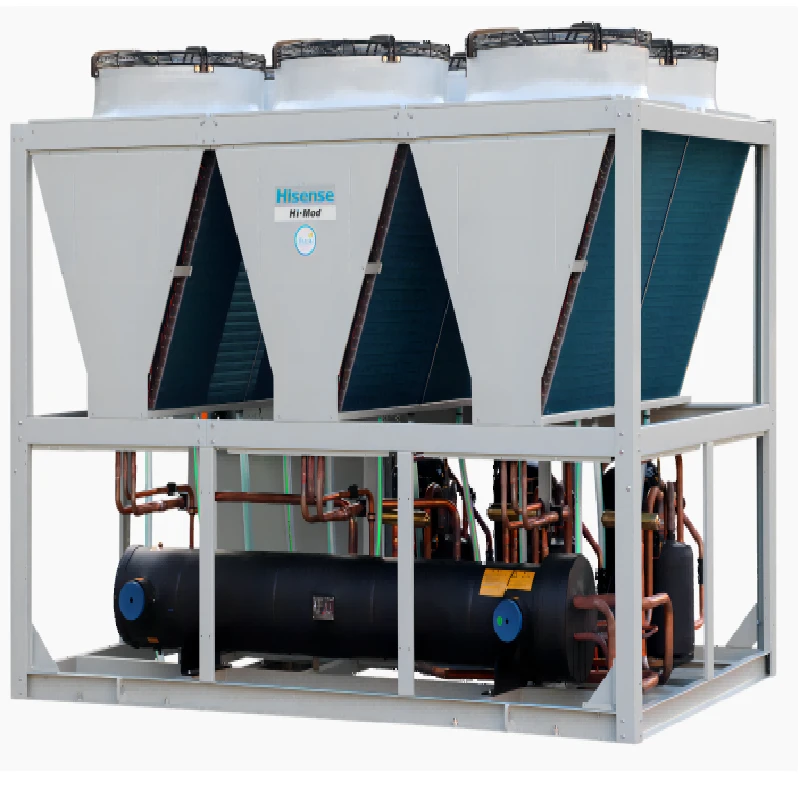
Optimal Refrigerant Charge for Air - Cooled Scroll Chillers
Determining the optimal refrigerant charge for an air - cooled scroll chiller is a complex process that requires careful consideration of several factors. These factors include the chiller's size, capacity, operating conditions, and the type of refrigerant used.
Most air - cooled scroll chillers are designed to operate within a specific refrigerant charge range. This range is typically specified by the manufacturer in the chiller's technical documentation. It is crucial to follow these guidelines to ensure the chiller operates at its best.
Methods for Checking and Adjusting Refrigerant Charge
There are several methods for checking and adjusting the refrigerant charge in an air - cooled scroll chiller. One common method is to use pressure and temperature measurements. By measuring the pressure and temperature at various points in the system, technicians can calculate the superheat and subcooling values. These values can then be compared to the manufacturer's specifications to determine if the refrigerant charge is correct.
Another method is to use a refrigerant scale. This involves weighing the refrigerant as it is added or removed from the system. This method provides a more accurate way of measuring the refrigerant charge, especially when dealing with large - capacity chillers.
Importance of Professional Maintenance
Maintaining the correct refrigerant charge in an air - cooled scroll chiller requires regular professional maintenance. A qualified technician can perform regular inspections, check the refrigerant charge, and make any necessary adjustments. They can also identify and address any potential issues before they become major problems.
At our company, we offer comprehensive maintenance services for Scroll Chiller. Our team of experienced technicians is trained to handle all aspects of chiller maintenance, including refrigerant charge management. We use the latest tools and techniques to ensure that your chiller is operating at its optimal performance.
Impact on the Environment
In addition to its impact on the chiller's performance, the refrigerant charge also has environmental implications. Many refrigerants used in air - cooled scroll chillers have a high global warming potential (GWP). An improper refrigerant charge can lead to refrigerant leaks, which contribute to greenhouse gas emissions.
By maintaining the correct refrigerant charge, we can not only improve the chiller's performance but also reduce its environmental impact. This is in line with our commitment to sustainability and environmental responsibility.
Conclusion
The refrigerant charge is a critical factor in the performance of an air - cooled scroll chiller. Both under - charging and over - charging can lead to a range of performance issues, including reduced cooling capacity, increased energy consumption, and potential damage to the system. By ensuring the correct refrigerant charge, we can optimize the chiller's performance, improve its efficiency, and extend its lifespan.
If you are in the market for a high - quality Scroll Chiller, Chiller Scroll Compressor, Inverter Scroll Chiller, or Air Cooled Scroll Compressor Chiller, look no further. We are a trusted supplier with a proven track record of providing reliable and efficient chiller solutions. Our team of experts is ready to assist you in selecting the right chiller for your needs and ensuring its optimal performance. Contact us today to start a discussion about your upcoming chiller project and explore how we can meet your specific requirements.
References
ASHRAE Handbook - HVAC Systems and Equipment. American Society of Heating, Refrigerating and Air - Conditioning Engineers.
Technical manuals of various air - cooled scroll chiller manufacturers.