


As a supplier of Modular Chiller Plant, I often get asked if a modular chiller plant can be integrated with other HVAC systems. Well, let me tell you, the answer is a big yes! And in this blog, I'm gonna break down how and why this integration is not only possible but also super beneficial.
First off, let's understand what a modular chiller plant is. It's a pre - built, self - contained cooling system that can be easily transported and installed. These plants are made up of multiple modular units, which gives them flexibility in terms of capacity and configuration. They're designed to provide efficient cooling for various applications, from small commercial buildings to large industrial facilities.
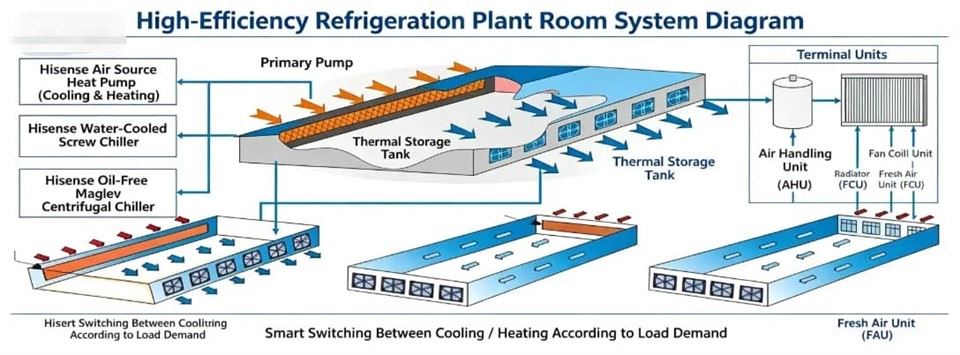
Now, when it comes to integrating a modular chiller plant with other HVAC systems, there are several key aspects to consider. One of the main reasons for this integration is to enhance overall system efficiency. For example, by integrating with a Chiller System HVAC, we can create a seamless cooling and heating solution. The modular chiller plant can handle the heavy - lifting of cooling, while other HVAC components can take care of things like ventilation, air filtration, and heating.
Let's talk about the technical side of things. Most modern modular chiller plants are designed with advanced control systems. These systems can communicate with other HVAC components using standard protocols, such as BACnet or Modbus. This means that the modular chiller plant can receive and send data to other parts of the HVAC system, allowing for real - time monitoring and adjustment. For instance, if the temperature in a certain area of the building rises, the control system can automatically increase the cooling capacity of the modular chiller plant and adjust the operation of other HVAC equipment accordingly.
Another advantage of integrating a modular chiller plant with other HVAC systems is cost - savings. By optimizing the operation of the entire HVAC system, we can reduce energy consumption. For example, during mild weather conditions, the modular chiller plant can work in conjunction with an Air Cooled Chiller System to provide just the right amount of cooling. This way, we're not over - working any single component, which leads to lower energy bills and longer equipment lifespan.
In terms of installation, integrating a modular chiller plant with other HVAC systems is a breeze. Since modular chiller plants are pre - fabricated, they can be quickly installed and connected to existing HVAC infrastructure. This reduces the installation time and disruption to the building occupants. And because they're modular, it's easy to add or remove units as the cooling needs of the building change over time.
Let's take a look at some real - world examples. In large commercial buildings, a modular chiller plant can be integrated with a central HVAC system. The modular chiller plant can be placed on the rooftop or in a mechanical room, and then connected to the building's ductwork and piping. This setup allows for efficient distribution of cooled air throughout the building. In industrial settings, a Industrial Water Chiller System can be integrated with a modular chiller plant to provide process cooling. The industrial water chiller can handle the high - heat loads generated by industrial processes, while the modular chiller plant can support the overall cooling needs of the facility.
When it comes to maintenance, integration also makes things easier. With a unified control system, it's easier to monitor the performance of all HVAC components, including the modular chiller plant. This allows for proactive maintenance, which can prevent breakdowns and extend the life of the equipment. For example, if the control system detects a slight decrease in the efficiency of the modular chiller plant, it can send an alert to the maintenance team, who can then take action before the problem gets worse.
However, like any integration project, there are some challenges to be aware of. One of the main challenges is ensuring compatibility between different HVAC components. It's important to work with experienced engineers and contractors who understand the technical requirements of integrating a modular chiller plant with other systems. They can help select the right components and design a system that works seamlessly.
Another challenge is the initial cost of integration. While the long - term savings in energy and maintenance costs can be significant, the upfront investment can be higher compared to installing a standalone system. But when you consider the benefits of improved efficiency, flexibility, and reliability, it's definitely worth the investment.
So, there you have it! A modular chiller plant can definitely be integrated with other HVAC systems, and the benefits are numerous. Whether you're looking to upgrade an existing HVAC system or build a new one from scratch, integrating a modular chiller plant can be a smart move.
If you're interested in learning more about our Modular Chiller Plant and how it can be integrated with your HVAC system, feel free to reach out. We're here to help you find the best cooling solution for your needs. Let's start a conversation about how we can work together to create an efficient and reliable HVAC system for your building or facility!
References
- Smith, J. (2020). HVAC Systems Integration: Best Practices. HVAC Journal.
- Johnson, A. (2019). Modular Chiller Plants: A Revolution in Cooling. Industrial Cooling Magazine.
- Brown, C. (2021). Energy - Efficient HVAC Integration Strategies. Energy Efficiency Review.