


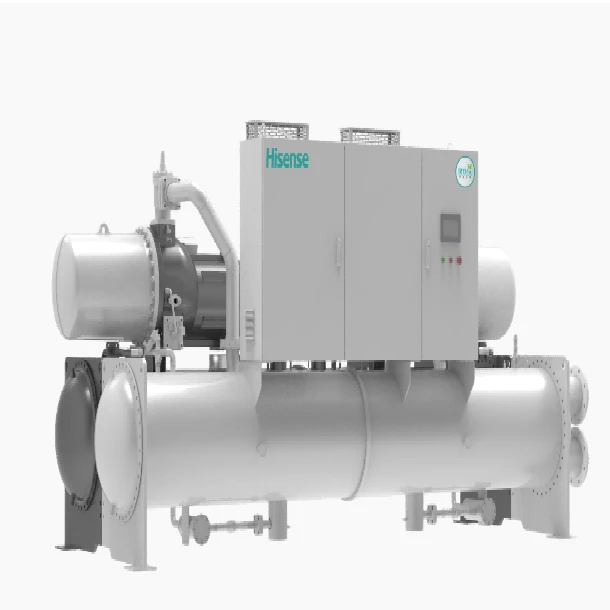
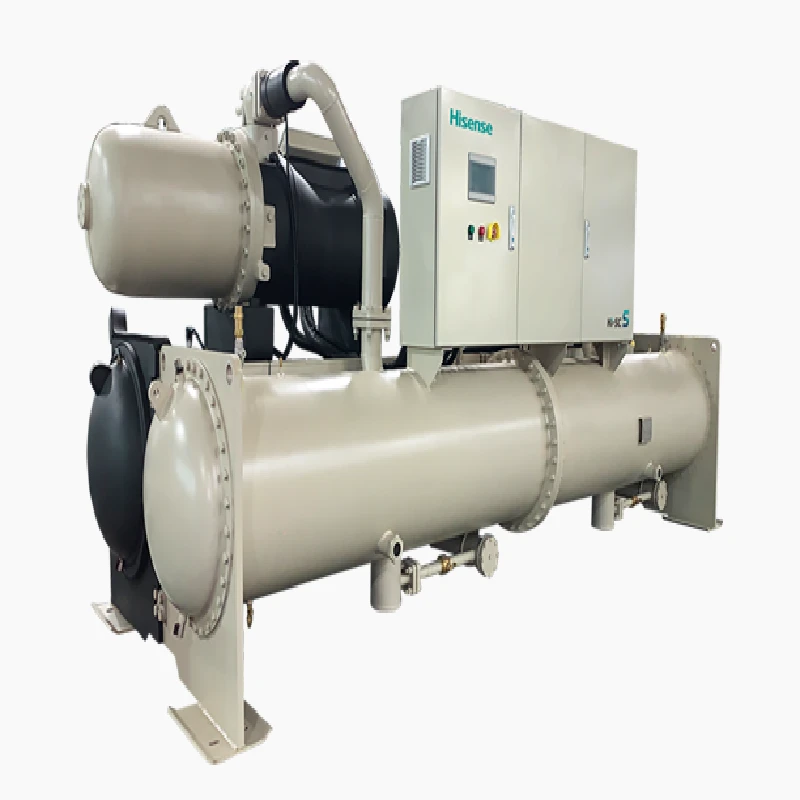
As a supplier of water - cooled screw chillers, I'm stoked to chat about how the control logic of these chillers can optimize energy use. You know, energy efficiency is a huge deal these days, not just for saving some bucks but also for doing our bit for the environment.
1. Core Objectives of Control Logic
The control logic of a water-cooled screw chiller typically focuses on the following objectives:
Meet cooling load requirements: Maintain the chilled water supply temperature or return temperature within the set range.
Ensure operating safety: Avoid frequent compressor start-stop cycles, liquid slugging, abnormal oil pressure, excessive discharge temperature, motor overload, and other issues.
Optimize evaporating and condensing temperatures: While meeting process and comfort requirements, raise the evaporating temperature and lower the condensing temperature as much as possible to improve COP.
Achieve load matching: Adjust compressor capacity according to the actual cooling load to avoid "oversizing for a small load."
Coordinate water-side and air-side equipment: Chilled water pumps, condenser water pumps, cooling tower fans, valves, and other components should be controlled in a coordinated manner.
Support group control and remote management: Multiple chillers should be capable of rotation, staging, fault switching, data uploading, and remote diagnostics.
2. Load Matching and Compressor Capacity Control
The cooling load of a chiller is not constant. Outdoor temperature, indoor occupancy, equipment heat gain, process production rhythm, building orientation, and shading conditions all affect the load. Control logic must sense load changes in real time and adjust compressor output.
Common capacity control methods for water-cooled screw compressors include:
Stepless slide valve control: The slide valve changes the effective compression length of the rotor, enabling stepless capacity control within approximately 25%–100%. This is the most commonly used method in traditional screw chillers.
Variable speed drive (VSD): Compressor capacity is adjusted by changing compressor speed. Part-load efficiency is higher, especially suitable for applications with large load fluctuations.
Hybrid control: Combining variable frequency and slide valve control to achieve both a wide load range and good part-load efficiency.
It should be noted that not all water-cooled screw chillers are equipped with VSD. Whether VSD is used depends on model positioning, load characteristics, investment budget, and energy efficiency requirements. Therefore, a more accurate statement is: the control logic adjusts compressor capacity through slide valve, variable frequency, or hybrid methods based on chilled water temperature deviation and rate of change.
The control logic should also set reasonable loading/unloading deadbands, time delays, and rate limits to avoid frequent compressor loading/unloading or frequent start-stop cycles. For multi-compressor-head screw chillers, the start-stop sequence and load distribution among heads also need to be optimized.
3. Chilled Water Loop Control
The chilled water loop transports cooling capacity generated in the evaporator to air conditioning terminals or process equipment. Control logic typically monitors chilled water supply temperature, return temperature, flow rate, and differential pressure.
Common control strategies include:
Supply water temperature control: Use chilled water supply temperature as the primary controlled variable and maintain it close to the set point. If the supply temperature is below the set point, reduce compressor capacity; if it is above the set point, increase capacity.
Return water temperature control: Use return water temperature or supply-return temperature difference as a reference to determine terminal load changes.
Temperature difference control and flow adjustment: In variable flow systems, adjust chilled water pump frequency based on supply-return temperature difference and the differential pressure of the most unfavorable loop.
Differential pressure control: Maintain the differential pressure required by the most unfavorable terminal to avoid excessive valve throttling.
Bypass control: When terminal flow is lower than the minimum flow required by the chiller, open the bypass valve to ensure minimum water-side flow through the evaporator.
Chilled water temperature reset: When humidity requirements allow, appropriately raise the chilled water supply temperature. This can increase the evaporating temperature and improve chiller COP. The specific increase depends on the model, refrigerant, and operating conditions.
The key to chilled water control is: while meeting terminal dehumidification and comfort requirements, raise the chilled water supply temperature as much as possible, and ensure minimum water-side flow and stable differential pressure.
4. Condenser Water Loop Control
The condenser water loop removes condenser heat from the condenser. Its control quality directly affects condensing temperature and chiller efficiency. The lower the condenser water temperature, the lower the condensing temperature is generally, the lower the compressor power consumption, and the higher the chiller COP. However, excessively low condenser water temperature may also cause changes in lubricating oil viscosity, refrigerant migration, and other issues, so comprehensive control is required.
Common control strategies include:
Condenser water supply temperature control: Maintain condenser water supply temperature within the set range by using cooling tower fan variable frequency control.
Approach temperature control: Control the approach between cooling tower outlet water temperature and outdoor wet-bulb temperature. The smaller the approach, the higher the cooling tower efficiency, but the greater the fan energy consumption.
Cooling tower fan variable frequency control: Adjust fan speed based on condenser water temperature or condensing pressure. This is the most common and safest energy-saving method on the condenser water side.
Condenser water variable flow control: On the premise of meeting the condenser's minimum flow and minimum velocity, condenser water pump frequency can be adjusted according to heat load and temperature difference. However, it must be noted that energy cannot be saved simply by reducing condenser water flow. If the flow is too low, the flow velocity in the heat exchange tubes will be insufficient, turbulence will weaken, fouling risk will increase, and the condensing temperature may even rise, causing compressor power consumption to increase instead.
Condensing temperature reset: Dynamically adjust the condensing temperature target based on outdoor wet-bulb temperature and chiller load.
Free cooling and natural cooling: In low-temperature seasons or high-latitude regions, cooling towers or dry coolers can be used to provide cooling directly, reducing compressor operating time.
Therefore, energy saving on the condenser water side should prioritize: cooling tower fan variable frequency control, condenser water temperature reset, condensing pressure optimization, and the combination of pump variable frequency control with minimum flow protection.
5. Environmental Conditions and Predictive Control
Environmental conditions have a significant impact on the efficiency of water-cooled screw chillers. The lower the outdoor wet-bulb temperature, the lower the cooling tower outlet water temperature, the lower the condensing temperature, and the higher the chiller efficiency. Control logic should dynamically optimize condenser water temperature based on outdoor temperature and humidity, cooling tower performance, and chiller load.
Some advanced control systems also use predictive control or model predictive control (MPC). The basic idea is:
Collect historical operating data, weather forecasts, building occupancy, production plans, and other information;
Establish a load prediction model;
Adjust chiller loading/unloading, chilled water temperature, condenser water temperature, and cooling tower fan speed in advance;
Avoid energy consumption peaks and frequent equipment start-stop caused by sudden load changes.
However, predictive control is not available on all chillers. It requires high-quality sensors, stable communication, sufficient data, reasonable models, and system integration. For ordinary projects, a more practical approach is to do a good job in PID control, temperature reset, chiller staging control, and equipment interlocking.
6. System-Level Energy Saving and Group Control Strategies
Optimizing the control of a single chiller is only the first step. For a plant room with multiple water-cooled screw chillers, system-level group control often provides greater energy-saving potential.
Common group control strategies include:
Chiller staging control: Determine how many chillers to start based on total cooling load and the efficient operating range of each chiller.
Rotation operation: Balance operating hours among chillers to extend overall service life.
Load distribution: Prioritize high-efficiency chillers for base load and lower-efficiency chillers for peak shaving.
Chilled water and condenser water temperature reset: Dynamically adjust temperature set points based on outdoor wet-bulb temperature and terminal demand.
Pump and cooling tower interlocking: Optimize chilled water pumps, condenser water pumps, and cooling tower fans as a whole rather than controlling them independently.
Fault switching and standby: Ensure system reliability and continuity.
Data monitoring and energy efficiency analysis: Continuously track COP, IPLV, NPLV, condensing temperature, evaporating temperature, superheat, approach temperature, and other indicators.
When evaluating the energy efficiency of a water-cooled screw chiller, do not look only at full-load COP. In actual operation, the chiller operates at part load most of the time. Therefore, focus should be placed on:
COP: Coefficient of performance at rated conditions;
IPLV: Integrated part-load value;
NPLV: Non-standard part-load value;
Condensing temperature and evaporating temperature: Directly affect actual operating efficiency;
Approach temperature: Reflects heat exchanger cleanliness and performance.
7. Maintenance and Reliability
No matter how advanced the control logic is, it cannot work without good maintenance. Long-term efficient operation of water-cooled screw chillers requires:
Regularly check compressor oil level, oil quality, oil pressure, and oil temperature;
Clean condensers and evaporators to prevent scaling and fouling;
Perform proper water treatment for condenser water and chilled water;
Calibrate temperature, pressure, and flow sensors;
Inspect cooling tower water distribution, fill, and fans;
Verify valve, bypass, and variable frequency drive operation;
Analyze operating data and identify abnormal trends in time.
8. Conclusion
The control logic of a water-cooled screw chiller directly determines its actual energy efficiency, reliability, and service life. A professional control strategy should:
Adjust compressor capacity through slide valve, variable frequency, or hybrid methods based on chilled water temperature deviation and rate of change;
Optimize chilled water and condenser water loops while ensuring minimum flow and differential pressure;
Prioritize reducing condensing temperature through cooling tower fan variable frequency control and condensing temperature reset;
Avoid simply reducing condenser water flow, which may cause heat exchange deterioration and energy consumption rebound;
Combine environmental conditions, load prediction, and group control strategies to achieve system-level energy saving;
Continuously monitor key indicators such as COP, IPLV, NPLV, and approach temperature.
If you are selecting or optimizing a water-cooled screw chiller, it is recommended not to focus only on compressor brand and full-load parameters, but also on control logic, part-load efficiency, water-side interlocking strategies, and after-sales support. As a water-cooled screw chiller supplier, we can provide customized selection, control scheme optimization, and operation and maintenance recommendations to help your cooling system remain efficient, stable, and reliable throughout the year.
Welcome to contact us to discuss water-cooled screw chillers and energy-saving control solutions suitable for your project.
References
ASHRAE Handbook. Heating, Ventilating, and Air - Conditioning Systems and Equipment. American Society of Heating, Refrigerating and Air - Conditioning Engineers.
Dossat, R. J. Principles of Refrigeration. Prentice - Hall, Inc.